P80 Plasma Cutting Consumables
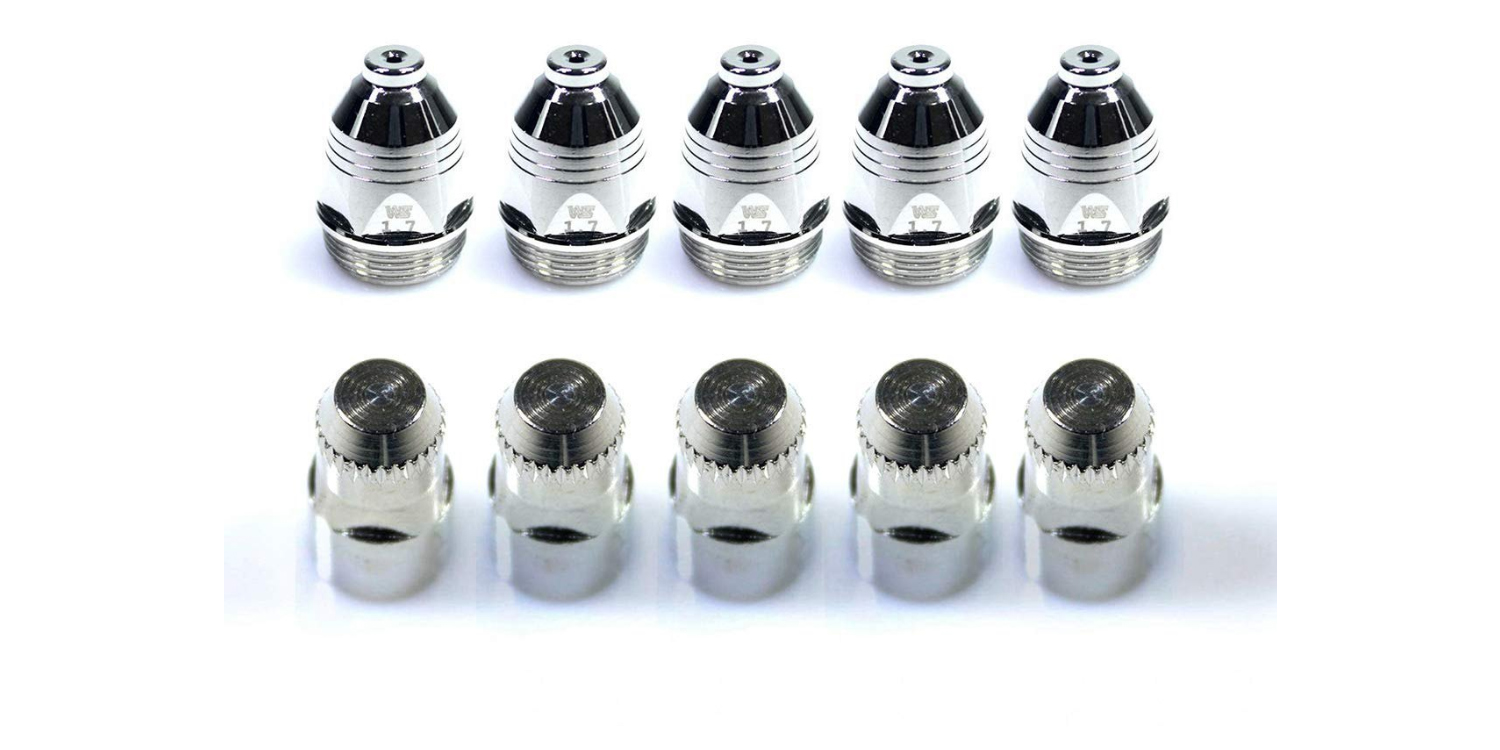
P80 Plasma Cutting Consumables
P80 Plasma Cutting Consumables are precision-engineered components designed to deliver optimal performance, durability, and cutting efficiency in P80 plasma torch systems. These consumables play a critical role in maintaining arc stability, ensuring clean cuts, and extending the overall life of the plasma cutting torch.
Manufactured using high-quality materials such as copper, hafnium, and heat-resistant ceramics, P80 consumables are built to withstand high temperatures and demanding cutting environments. They are ideal for both manual and CNC plasma cutting applications, offering consistent results across a wide range of conductive metals.
Technical Specifications
| Consumable Types | Nozzle, Electrode, Swirl Ring, Shield Cup, Retaining Cap |
|---|---|
| Compatible Torch | P80 Plasma Torch |
| Current Capacity | Up to 100 Amps |
| Nozzle Diameter Range | 0.8 mm – 1.7 mm |
| Nozzle Material | High Conductivity Copper |
| Electrode Material | Copper with Hafnium Insert |
| Shield Cup Material | Heat-resistant Ceramic |
| Swirl Ring Material | High-temperature Resistant Polymer |
| Gas Type | Compressed Air |
| Working Pressure | 4.5 – 5.5 Bar |
| Cooling Method | Air Cooling |
| Cutting Thickness | Up to 20–25 mm (machine dependent) |
| Application Type | Manual & CNC Plasma Cutting |
| Compatibility | Standard P80 Torch Models |
| Service Life | Long-lasting under proper usage conditions |
| Usage Industries | Fabrication, Automotive, Construction, Heavy Engineering |
Key Features
High durability and heat resistance
Excellent arc stability for smooth cutting
Reduced dross and improved edge quality
Compatible with standard P80 plasma torches
Suitable for high-current applications up to 100 Amps
Easy installation and replacement
Cost-effective with long service life
Applications
Industrial fabrication
Sheet metal cutting
Automotive repair and maintenance
Heavy engineering and construction
CNC plasma cutting systems
Compatible Materials
Mild Steel
Stainless Steel
Aluminum
Copper and other conductive metals